Sunday, April 19, 2015

It was.. I was..

It was scary at first, 
being completely submersed,
into a place with unknown faces, 
and there were so many changes. 

But I was ready,
And within the first 7 hours I already,
made a new friend,
whose life I attend.


It was Marian Isdahl,
who, like me, was small, 
and who felt to me like a sister.
In college I sure am going to miss her. 

I was making good grades,
especially with her aid, 
and together we learned during high school.
I think she's pretty cool.


It was fun to meet new people,
and not many were evil,
Together we had fun,
and making life long friends had begun.

I was growing up, 
And before I knew it freshman year was over, yep!
It went that quickly,
almost too swiftly.


It was harder the second year,
school work seemed to kick into high gear.
I took my first AP class,
but I didn't let it kick my... butt. 

I was learning time management,
and was quite passionate,
for keeping my grades up,
and not with red solo cups. 

It was when I made the decision,
to see to what extent I could obtain wisdom,
by joining IB.
Some said it would be the death of me.

I was excited to join the program,
but not excited for its' final exams.
Which are coming up soon, 
but junior and senior year has prepared me, has it prepared you?

It was an amazing four years,
and at graduation there will surely be tears.
There are so many times to remember, especially with the IB fam,
it's like having a little clan. 

I was brought closer to so many people,
especially one who's currently a cripple (Trey Sterling).
And I hope you enjoy the pictures below,
they're from my high school years in case you didn't know. 


 (p.s. sorry to anyone I didn't upload a picture with)


Sunday, April 5, 2015

Whitman's Notebook

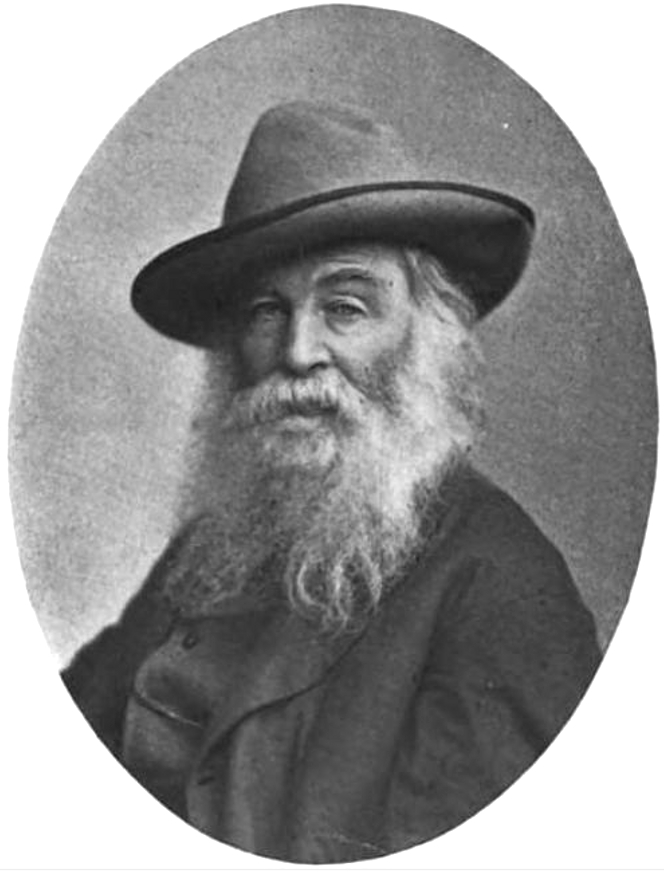
While scrolling through Whitman's notebook I noticed a common occurrence- illegible handwriting. But the page that I was able to make out most clearly was page 10. This page is referencing a ship at the beginning of each fragment, specifically stating, "Ship of the world- ship of humanity- ship of the ages- ship that circles the world- ship of the hope of the world- ship of promise." This ship may be literal, but I interpreted it as metaphorical. I think that the ship he is referring to is possibly a new idea, or perspective on a previously known idea, that has the potential to change the world.

After reading the transcription to Whitman's writing found on page 10 in his notebook, I was pleased to see that the words I made out from the page were correct. Reading why Whitman actually wrote this also went along with my original interpretation that the 'ship' was not literal and was referring to a greater event involving many people. Whitman's reasoning for writing this was that he had, "reached a conclusion at which the president-elect had not yet arrived: that the future of world history was bound up in the success or failure of the America's democratic experiment." The 'ship' could now be seen as either the future of world history as a whole, or the success/failure of the America's democratic experiment. Knowing the reasoning behind Whitman's writing also aided in revealing more about himself. I think it shows how he thinks ahead, and contemplates positive and negative consequences to anything in his present in order to make conclusions. 

Friday, March 13, 2015

The American Dream

1. How would you describe the “American Dream?”

To me, the American Dream is achieving success through hard work and determination. But being successful differs for every person. So, the American Dream could also be described as achieving personal goals; this would cause for the individual to feel successful.

People come to America in hopes of achieving their "American Dream" which may be finding a job in order to provide for their family, or even finding someone to start a family with. People may even hope to go from "rags to riches" once in America. But others may come to America to live the "American Dream" where everyone is supposed to be treated and seen equally. 

My american dream would be to become successful in a job that I truly enjoy, while at the same time being able help others. A second part of my american dream would be to eventually start a happy, healthy, and loving family with the man that I love.  


2. What is your definition of wealth?

My first definition of wealth is someone who has enough money to pay for all necessities, and still has enough money to also buy extravagant things and occasionally spoil themselves. But I don't think that wealth is all about money, or material goods. My second definition of wealth is someone who is smart with their money, and also has a strong and loving family. Wealth means having a surplus of a desired item, which could be unconditional love from family and friends, causing for constant happiness. This, to me, is the best kind of wealth there is. 


3. What are Americans’ attitudes toward wealth and poverty?

I think that most American's have a stereotypical attitude towards wealth; that is it for the select individuals who are extremely talented in their area of study and achieve high levels of success. Or have been born into a wealthy family. Whereas the stereotypical attitude towards poverty is that it is for those who are incapable of handling today's society; possibly weak or uneducated. But wealth, as I stated before, is not all about money or the material goods that one has. Wealth is something that should feel achievable by everyone, in their own individual way. 


4. What is your attitude toward wealth and poverty?

My attitude towards wealth and poverty is that if one genuinely works hard for their goals, then they will achieve success, possibly even their american dream, and avoid poverty. Being that I defined wealth as also being happy with strong relationships, one can be wealthy without having a plentiful supply of money. 

Sunday, February 15, 2015

Practice IOC

Analyzed Passage


Grading Justification

A: Knowledge and understanding of the text or extract
For this criterion I gave myself a 7 because I knew the book that this extract belonged to, and I explained the plot of the book where my extract took place, thus showing my knowledge of the text. I also explained the extract itself to show my understanding of the extract.

B: Understanding of the use and effects of literary features 
For this criterion I gave myself a 4 because I showed awareness of the literary features used and explained what those features reveal, but I didn't go in depth about their effects on the reader.

C: Organization 
For this criterion I gave myself a 3 because my IOC was organized and structured, but only somewhat followed the flow of the passage during the "body" of my IOC. 

D: Language 
For this criterion I gave myself a 3 because the language was clear and appropriate, but I had many pauses while trying to think of what to say, and some of my statements could be seen as difficult to follow. 

Sunday, February 1, 2015

Ishiguro Book Covers

http://2.bp.blogspot.com/-IdLjajFmGpY/
U4usHozBQ6I/AAAAAAAAKZo/
6_cbv5Wa_xs/s1600/ishiguro-never-let-me-go.jpg


http://smithsonianapa.org/bookdragon/
wp-content/uploads/sites/10/2005/
05/Never-Let-Me-Know.jpg


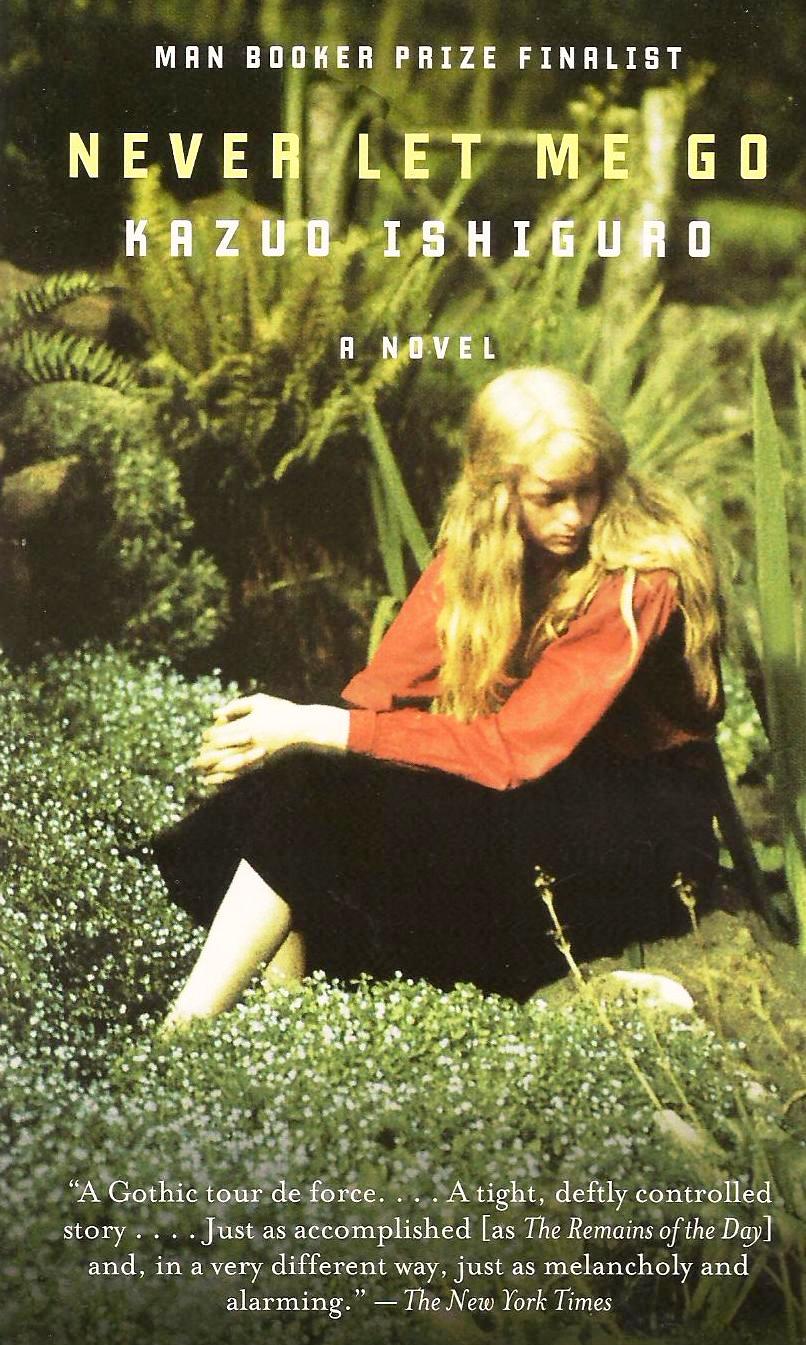
The two book covers shown above are both for Kazuo Ishiguro's book, Never Let Me Go. The first image on the left is mostly green, and includes a girl that is looking down and to her left. The girl is clearly visible and distinguishable. She is young with long blonde hair, and she stands out by wearing a red shirt against the green shrubbery. The second image to the right is mostly yellow, and includes what seems to be a girl. This girl is blurry, as is the background; it comes across as more of abstract. It is unclear to whether or not she is young, but she seems to be in motion. She has short brown hair, and she stands out by wearing a teal/blue dress against the yellow. By finding the similarity of the girl in both book covers, it could be understood that the book will revolve around the life of a girl. Also, the intended purpose of portraying the girls face as hidden in the book covers shows that there is somewhat of a mystery within the book, or possibly a struggle with finding ones' true self. But the possible reasons for various book covers include: trying to attract different audiences, appealing to the readers, portraying the book differently, having different ways to capture the books' purpose, and/or even intending for a different judgement of the book since people often judge a book by its' cover. 

Book Cover #1
For the first book cover on the left, the first words that come into my mind when I see the image are 'misunderstood', 'lonely', and 'lively'. The girl portrayed is hiding her face, but wearing such a bold color, and she doesn't appear to be scared, thus causing for my thought of the word 'misunderstood.' Since she is by her self and somewhat hiding, she seems lonely. And the large plant life that is surrounding her makes me think that she may have a lively personality. 

If I hadn't read the novel, this image would make me think that this book is revolving around the life of one girl, and her interactions with the live world around her. But now that I have read (some of) the novel, this cover relates to the text because the girl portrayed is most likely Kathy H, and Kathy H is the first person narrator. The book follows Kathy's story through life, along with her two best friends, and touches on points when she does feel lonely due to her two friends closer relationship.

By looking at the cover, the kind of people who would read this would most likely be girls because they could find ways to relate to the girl on the front cover. People in relationships would also be likely to read this book because when in a relationship you never want let go of, and the title is Never Let Me Go. 


Book Cover #2
For the second book cover on the right, the first words that come into my mind when I see this image are 'abstract', 'interesting', and 'bold'. I think of the word 'abstract' because the way the cover seems to be painted reminds me of an abstract painting, where the object being drawn is visible yet not 100% clear. I think of the word 'interesting' because of the different shades of colors, and it says at the bottom of the cover that it is a top 10 best seller. Lastly, I think of the word 'bold' because of the organization of the words on the cover. The author's last name is the largest word on the front, and stands out compared to the title. It makes me think that he was bold, confident, and pleased with his writing. 

If I hadn't read the novel, this image would also make me think that this book is revolving around the life of one girl. But now that I have read (some of) the novel, this cover relates to the text because the girl portrayed is most likely Kathy H. The cover depicts the girl as blurry, and unrecognizable, which correlates to Kathy H because she is a clone, and wants to find who she really is. 

By looking at the cover, I feel that the kind of people who would read this would most likely be girls because I think the colors used would stand out and grab their attention. It also has somewhat of an antique-y book look, so the audience may be specifically older women.

Sunday, January 18, 2015

When a Reporter Becomes the Story

In the TED Talk, When a reporter becomes the story, Giles Duley states at the begging of his talk that, "by listening to other peoples stories we can learn about the world, about other people, and get a better understanding." So to prove his point, he tells his story; what inspired him, and how he inspired others. Giles Duley was a fashion and music photographer for 10 years, but he did not feel like he was doing the "right" thing. He eventually decided to drop from the photography business and he became a care worker. This is where Duley met his first inspiration to tell other peoples stories, his inspirations name was Nick. Nick was an autistic child who self-harmed and described his life as, "living downstairs at a party." Through working with Nick, Duley realized that he could tell someones life through photography, and be able to share their story to potentially help them even more by doing so. This realization actually proved to be true because Nick received more help after Duley shared his photograph of him, and he is currently doing a lot better and no longer self harming. 

Giles Duley's next inspiration came from a refugee camp site at the border of Burma and Bangladesh. The people here had been, "left to rot for over 20 years," and they were living hopelessly. Many people showed up to the place where Duley was taking photographs, but not because they thought he was a doctor, because they knew he was going to share their story. This reaction showed Duley that his work was truly worth while to the people at the other end of the camera.

In Odessa, Ukraine, Giles Duley met his next inspiration: street kids. While many people warned him of the street kids, Duley actually made the decision to live with them, and towards the end of his trip with them he even trusted to kids to hold his camera and bag while he entered the water with the oldest of the kids in the group. A boy named Lilic held the camera, and seemed to enjoy the idea of photography, so Duley promised to bring him his own camera and teach him photography. But unfortunately, Lilic was found dead the next day from drinking an excessive amount of vodka while taking pills. Duley took this incident as a reminder of why he documents these people because their lives are just as important as ours. 

Then, Giles Duley tells how he became part of the story. While on patrol in Afghanistan he stepped on an IED. He thought his work was over. But from this incident, he realized that he didn't travel the world just for the photographs, he wanted to make change, and now his body was a living example of what war does to somebody. So, he began to use his body and experience to tell that story, and it was the stories that he had previously documented that inspired him to do so. Giles Duley ended up taking a self portrait. One that shows what a bomb does, that shows that losing limbs doesn't end a life, that shows you can have what people perceive as a disability and not be disabled, and shows that you can be able to do anything if you put your mind to it and believe in it. 

So the purpose of this TED Talk, and having Giles Duley share his story is to show that everyone has the ability to use something to make a difference in the world, and there is nothing that can stop us from making that difference once our mind is set to it. Life goes on even when dealing with terrible things, but if we share those stories then we can inspire each other to get through those bad times. The speaker, Giles Duley, gets this point across by primarily utilizing ethos, and pathos. The speaker is extremely credible, considering he was a professional photographer, and had an extremely terrible personal experience that relates to this idea of story telling for inspiration of others. His expertise of photography were presented in this talk with photographs from the 3 stories previously mentioned, and also a self portrait of himself that revealed his injuries. Emotional appeal was also highly present in this TED Talk. Appealing to emotion was an effective strategy for the argument being discussed because the speaker was trying to evoke a sadness for others from the audience, so that the audience would then feel obligated to help others and also be inspired by his story of how he has continued with his life. The speaker is appealing to the emotions of the audience by describing the lives of the people in the three stories in such a way that no one would want to live like they do. In the second story, the lives of the refugees are described as "hopeless" and pictures are also shown displayed a child who has a tumor growing out of his face and he "is slowly suffocating" and he can't get help. Parents would not want their children living in those situations, and children would wish their parents could keep them out of situations like this and be able to help them, so this appeals to the emotions in the audience because the audience feels that they must do something since those families can't. 

I chose this TED Talk initially because the title of the talk grabbed my attention, and the photograph of Giles Duley as the cover of the video made me extremely curious to what could have happened to a man in order for him to loose both legs, one arm, and go from a reporter to the story. Then as I watched the TED Talk, I genuinely enjoyed listening to his story. His story from a professional fashion and music photographer, to care worker, to photography again but helping share the stories others lives, then sharing his own life story. I enjoy reading and watching inspirational things, and this TED Talk was extremely inspiring. It makes me want to go out and use something that I love in such a way that I can help make a difference in the world.